Overview:
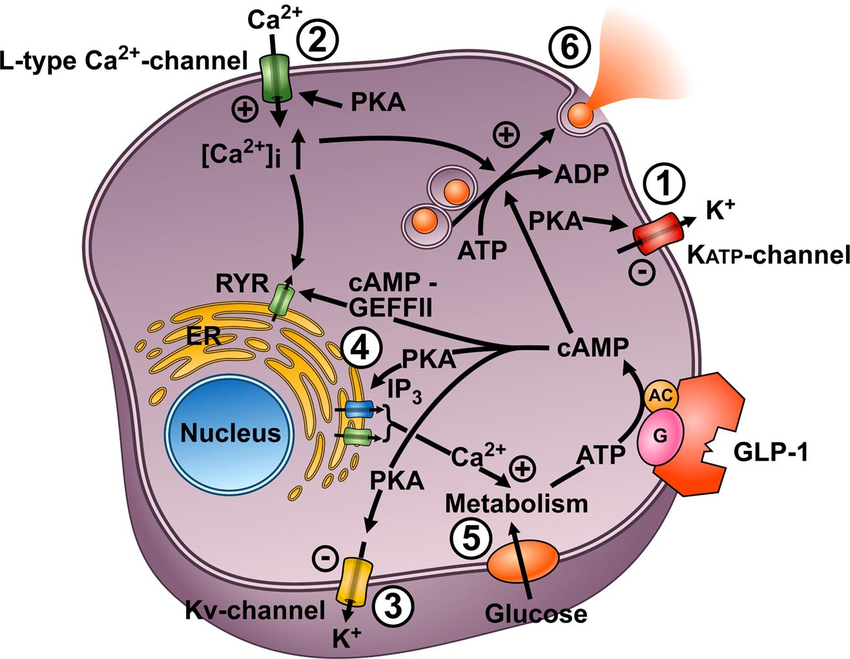
Glucagon-like peptide-1 (GLP-1) receptor agonists are a class of drugs originally developed to treat type 2 diabetes and, more recently, obesity. These medications mimic the action of the GLP-1 hormone, which regulates appetite, glucose metabolism, and gastric emptying. In the context of Bardet-Biedl Syndrome (BBS), GLP-1 agonists are emerging as a potential therapy to address severe obesity, one of the hallmark symptoms of the condition.
How It Works:
GLP-1 agonists bind to GLP-1 receptors in the brain, particularly in areas such as the hypothalamus, to reduce hunger and increase satiety. They also slow gastric emptying, helping individuals feel full longer, and improve insulin sensitivity, which can be beneficial for individuals with obesity-related metabolic complications. These mechanisms make GLP-1 agonists a promising treatment for managing obesity in BBS patients.
Indications:
GLP-1 agonists, including drugs such as semaglutide (Ozempic/Wegovy) and liraglutide (Saxenda), are currently approved for general obesity management and type 2 diabetes. While not yet specifically approved for Bardet-Biedl Syndrome, they are being explored as an off-label option to help manage obesity in BBS patients, offering a complementary or alternative approach to treatments like setmelanotide.
Clinical Impact:
Clinical studies and patient observations have shown that GLP-1 agonists can lead to substantial weight loss in individuals with severe obesity, including those with genetic syndromes like BBS. The reduction in hunger and improved metabolic profiles can significantly enhance the quality of life for BBS patients, making these medications a valuable part of a multidisciplinary approach to managing the condition.
Current directions:
Research is ongoing to determine the long-term efficacy and safety of GLP-1 agonists in genetic obesity disorders, including BBS. As personalized medicine advances, GLP-1 agonists may become an integral part of targeted treatment strategies for BBS-related obesity, either alone or in combination with drugs like setmelanotide.
In April 2025, researchers (Singh, 2025) reported they have developed a new mouse model lacking the BBS5 gene (BBS5⁻/⁻) to better understand Bardet-Biedl Syndrome (BBS), a rare genetic disorder marked by obesity, excessive hunger, learning difficulties, and metabolic dysfunction. These mice closely mimic human BBS symptoms, including insulin resistance, hormone imbalances, and abnormal fat tissue immune responses. Unlike typical obesity, the BBS5⁻/⁻ mice showed increased inflammation in fat tissue and pancreatic abnormalities without effective blood sugar control. Brain analyses revealed disrupted signaling for key appetite and metabolic hormones—insulin, leptin, and CCK—though sensitivity to GLP-1 remained intact. Remarkably, treatment with a GLP-1 receptor (GLP-1R) agonist significantly reduced overeating, improved blood sugar control, and stabilized hormone levels in the BBS5⁻/⁻ mice. This study positions the BBS5⁻/⁻ mouse as a valuable model for BBS research and highlights GLP-1R agonists as a promising therapy for BBS-related obesity and metabolic dysfunction.

Image from Singh, 2025
Resources:
-
Shoemaker, A. (2024). Bardet-Biedl syndrome: A clinical overview focusing on diagnosis, outcomes and best-practice management. Diabetes, Obesity and Metabolism. DOI: 10.1111/dom.15494
-
Erturk, B., Oguz, S. H., & Yildiz, B. O. (2023). Beneficial outcomes of glucagon like peptide-1 agonist therapy in a patient with Bardet Biedl syndrome and kidney transplant. JCEM Case Reports, 1(Supplement_1), luac014.036. DOI: 10.1210/jcemcr/luac014.036
-
Singh, A., Haq, N., Yang, M., Luckey, S., Mansouri, S., Campbell-Thompson, M., Jin, L., Christou-Savina, S., & de Lartigue, G. (2025). Transcriptome-guided GLP-1 receptor therapy rescues metabolic and behavioral disruptions in a Bardet-Biedl Syndrome mouse model. Journal of Clinical Investigation. https://doi.org/10.1172/JCI184636
-
Ganawa, S., Santhosh, S. H., Parry, L., & Syed, A. A. (2022). Weight loss with glucagon-like peptide-1 receptor agonists in Bardet-Biedl syndrome. Clinical Obesity, 12(5), e12546. DOI: 10.1111/cob.12546
- American Diabetes Association (ADA)
- Novo Nordisk – GLP-1 Research
- ClinicalTrials.gov – GLP-1 Agonists in Genetic Obesity